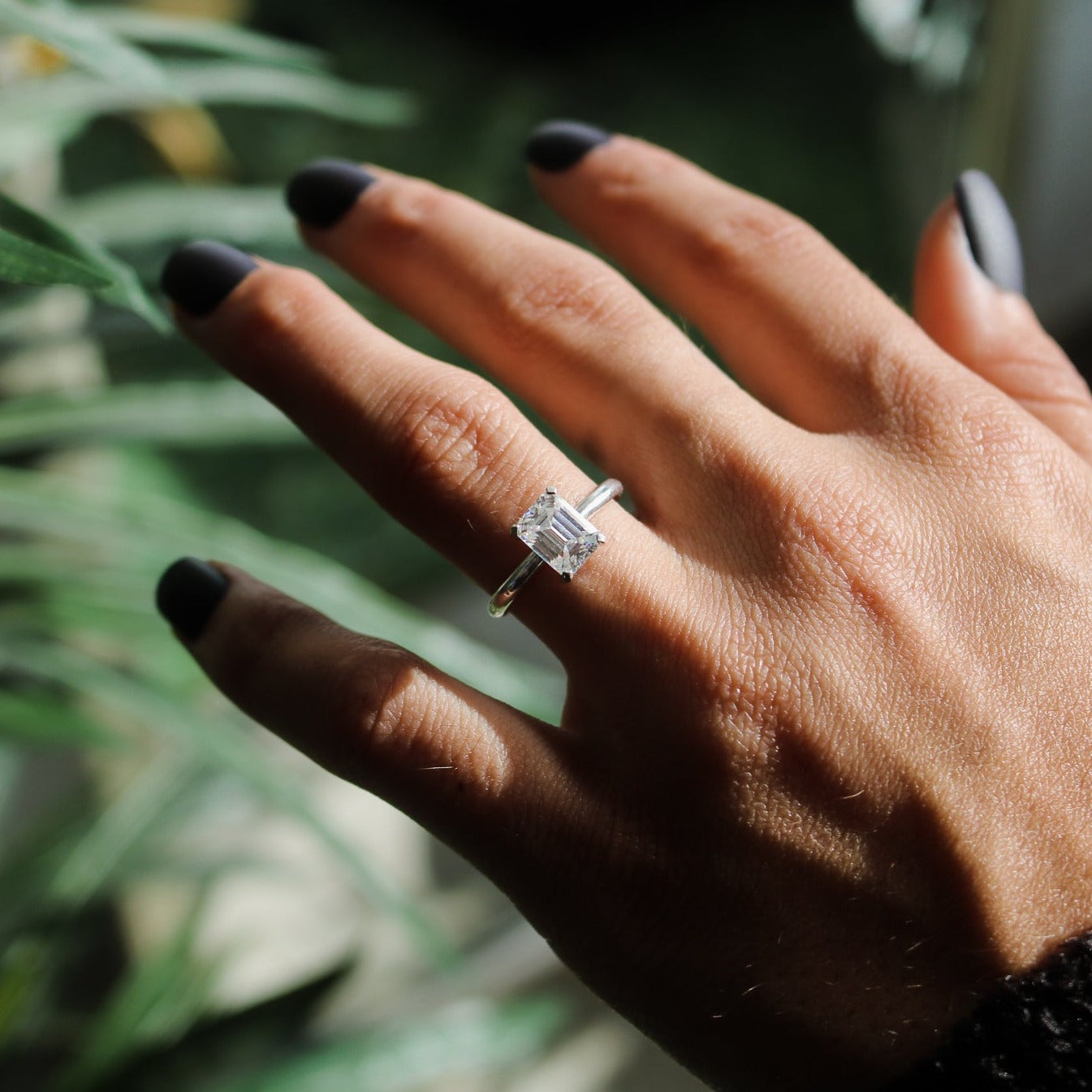
Choosing Your Engagement Ring Setting
Once you have chosen a stone, the setting is what turns it into a ring.
It determines how the diamond sits on your hand, how much of the stone is visible, how secure it is, how it pairs with a wedding band, and ultimately, how the entire piece feels.
The same oval diamond can look entirely different in a delicate four-prong solitaire, a substantial bezel, or a three-stone setting with tapered side stones.
The center stone may be the focal point, but the setting gives the ring its personality.
Classic or modern. Delicate or substantial. Romantic or architectural. Minimal or intricate.
Choosing the right setting is about finding the balance between beauty, lifestyle, and the way you want the ring to feel every time you look down at your hand.
What Is an Engagement Ring Setting?
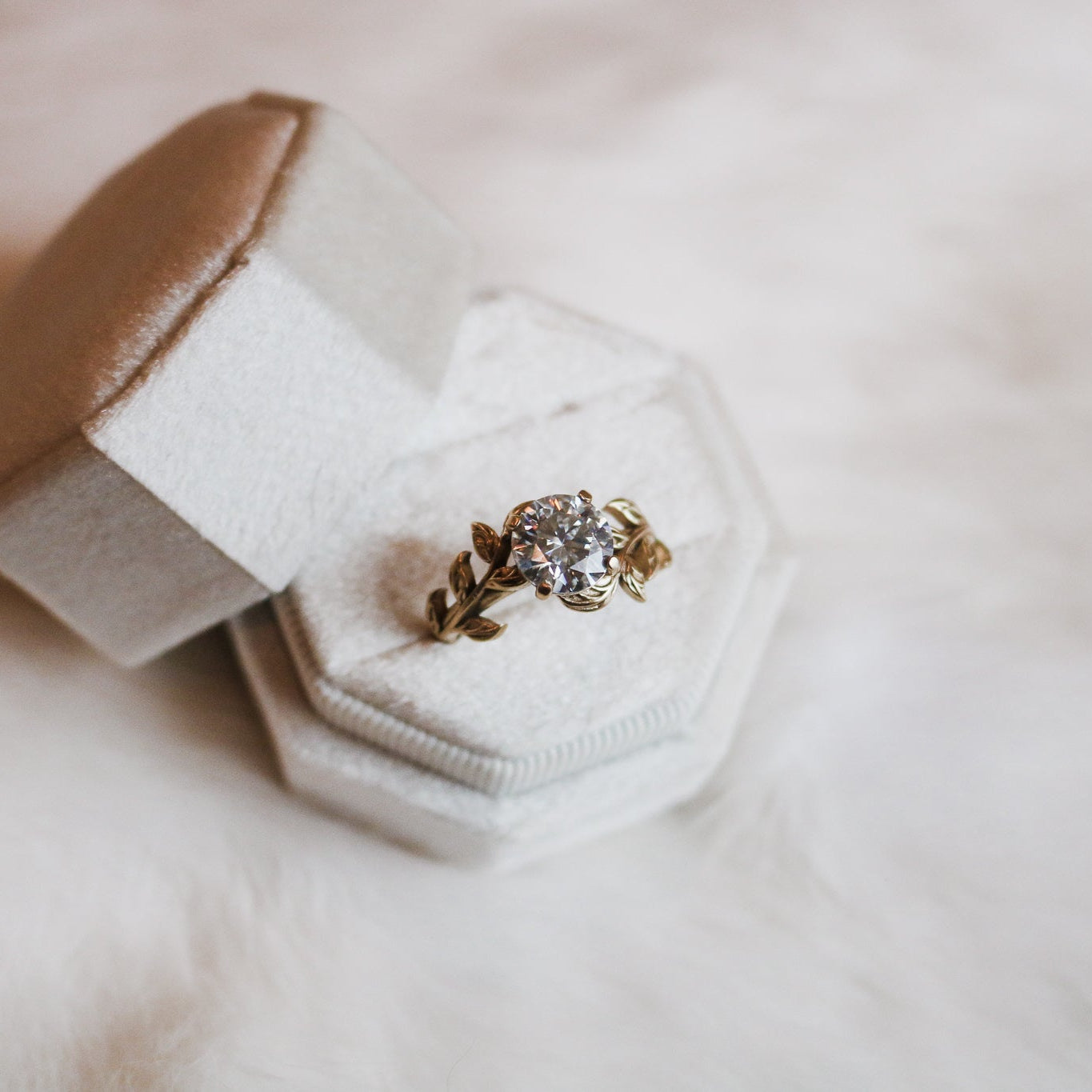
The setting refers to the metal structure that holds the center stone and creates the overall design of the ring.
It includes more than just the prongs.
The setting can determine:
-
How high or low the stone sits
-
How much of the diamond is visible
-
Whether the stone is held by prongs or surrounded by metal
-
Whether the ring includes side stones
-
How the ring pairs with a wedding band
-
How secure and protected the center stone is
-
The overall silhouette and style of the ring
When choosing a setting, it helps to think about two things at once:
What do you want the ring to look like?
And:
How do you want it to live with you?
The most beautiful design is one you can comfortably wear and enjoy.
Solitaire Settings
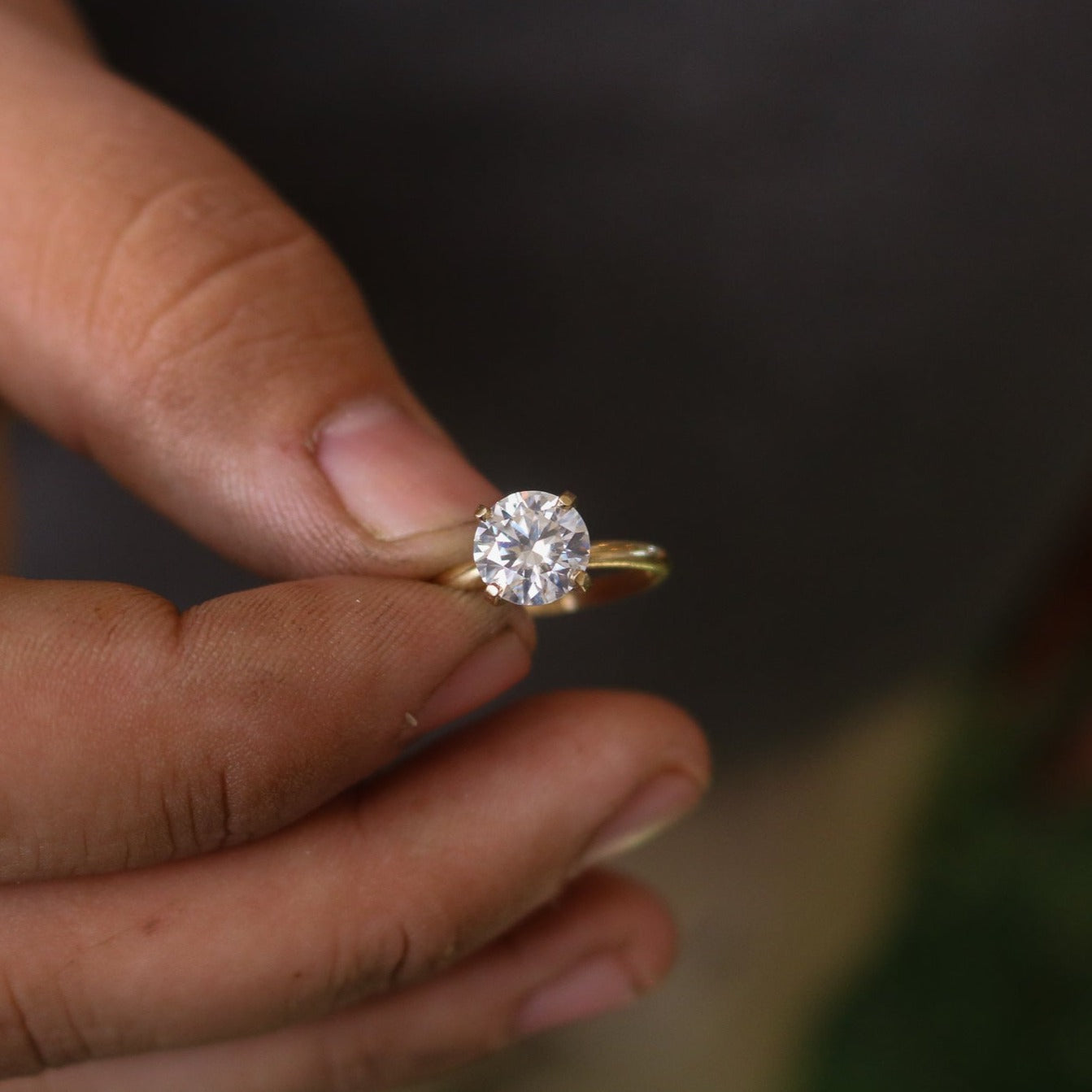
The solitaire is one of the most enduring engagement ring styles.
At its simplest, a solitaire features a single center stone with no side stones competing for attention.
But “simple” does not have to mean plain.
A solitaire can be delicate and minimal, sculptural and modern, warm and substantial, or softly detailed with subtle design elements.
The beauty of a solitaire is that the center stone remains the focus.
Why Choose a Solitaire?
A solitaire may be right for you if you:
-
Want the center stone to take center stage
-
Love timeless design
-
Prefer a clean, uncluttered look
-
Want flexibility with wedding bands
-
Appreciate a ring that can evolve with your style
Solitaire settings can also be surprisingly versatile.
A round diamond in a classic solitaire may feel traditional. An elongated radiant in a sleek, low-profile solitaire can feel distinctly modern. A cushion-cut diamond on a substantial yellow gold band can feel romantic and quietly luxurious.
The stone may be the same, but the details of the setting change everything.
Three-Stone Settings
A three-stone ring features a center stone accompanied by two side stones.
Traditionally, the three stones are sometimes said to represent the past, present, and future of a relationship, though the design can be meaningful without attaching any particular symbolism to it.
Three-stone rings can create a sense of balance and presence that a solitaire does not.
The side stones may be matching shapes or something entirely different.
Popular combinations include:
-
Oval center with pear side stones
-
Emerald center with tapered baguettes
-
Cushion center with trapezoid side stones
-
Round center with round side stones
-
Pear center with tapered diamonds
Why Choose a Three-Stone Setting?
Three-stone rings may be right for you if you:
-
Want more visual presence across the finger
-
Love a balanced, intentional design
-
Want to incorporate additional stones with meaning
-
Prefer something more substantial than a solitaire without going in the direction of a halo
A three-stone ring is often an opportunity to create something deeply personal.
The side stones can dramatically influence whether the finished ring feels classic, vintage, modern, or entirely unique.
Halo Settings
A halo surrounds the center stone with a border of smaller diamonds.
This can increase the overall visual size and create significant sparkle.
Halos can range from delicate and subtle to bold and dramatic.
A round diamond surrounded by a delicate halo can feel classic and romantic. A geometric halo around an emerald cut can feel structured and vintage-inspired.
Why Choose a Halo?
A halo may be right for you if you:
-
Love sparkle
-
Want to create more visual impact around the center stone
-
Enjoy a more detailed design
-
Are drawn to romantic or vintage-inspired rings
A halo is not necessarily the right choice for everyone.
Because it adds visual detail around the center stone, it can change the clean simplicity of a diamond's outline.
If you are drawn to the shape of your center stone itself, a solitaire, three-stone, or bezel setting may allow that shape to stand on its own more clearly.
Bezel Settings
A bezel setting surrounds all or part of the edge of the stone with metal.
It can be sleek and modern, soft and organic, substantial and sculptural, or even antique-inspired depending on how it is designed.
A full bezel completely surrounds the perimeter of the stone.
A partial bezel leaves portions of the stone exposed.
Why Choose a Bezel?
Bezel settings may be right for you if you:
-
Prefer a clean, modern look
-
Want additional protection around the edge of the stone
-
Love a low-profile design
-
Are drawn to substantial, sculptural jewelry
-
Want something slightly different from a traditional prong setting
A bezel can completely transform the personality of a diamond.
An oval diamond in delicate prongs may feel airy and traditional. The same oval surrounded by a substantial yellow gold bezel can feel modern, intentional, and almost architectural.
Bezel settings are especially appealing for people who want a ring that feels secure without looking overly delicate.
Prong Settings
Prongs are the small metal structures used to hold a stone in place.
They allow more of the diamond to remain visible than a bezel and are a classic choice for engagement rings.
But there are several different ways prongs can be designed.
Four-Prong Settings
Four prongs create a clean, minimal look.
They can allow more of the stone to remain visible while maintaining a secure setting when properly designed.
For certain shapes, four prongs can also create a softer or more open appearance.
Six-Prong Settings
Six prongs offer additional points of contact around the stone.
They can create a more traditional appearance and add visual detail around a round or oval center stone.
Some people prefer the sense of additional security that comes with six prongs, while others simply prefer the look.
Claw Prongs
Claw prongs taper to a finer point and can create a more delicate appearance.
They are often used in designs where the goal is to make the metal visually disappear as much as possible.
Rounded or Button Prongs
Rounded prongs have a softer, more substantial appearance.
They can feel classic and intentional and may be a better visual fit for certain designs than delicate claw prongs.
The right prong style depends on the shape of the stone and the overall character of the ring.
Cathedral Settings
A cathedral setting uses arches of metal that rise from the band toward the center stone.
This creates a more elevated profile and can give the ring a sense of structure and height.
Cathedral settings can range from delicate and subtle to bold and architectural.
Why Choose a Cathedral Setting?
A cathedral may be right for you if you:
-
Like the appearance of a more elevated center stone
-
Want additional visual detail from the side
-
Prefer a traditional or architectural silhouette
-
Like the sense of height and presence it creates
The tradeoff is that a higher profile can make the ring more noticeable during everyday activities.
That does not mean cathedral settings are impractical. It simply means profile should be part of the decision.
Low-Profile Settings
A low-profile setting positions the center stone closer to the finger.
These settings have become especially popular for people who want a ring that feels more streamlined and wearable.
A low profile can reduce the amount the center stone catches on clothing or other objects, though no ring is completely snag-proof.
Why Choose a Low-Profile Setting?
A low-profile setting may be right for you if you:
-
Prefer a streamlined look
-
Do not want the stone sitting high off the finger
-
Work with your hands frequently
-
Want the ring to feel more integrated into your everyday life
One important consideration is wedding band compatibility.
Depending on the design, a low-profile setting may prevent a straight wedding band from sitting flush against the engagement ring.
This does not make the design better or worse. It simply means the wedding band should be considered early in the process.
High-Profile Settings
A high-profile setting raises the center stone farther from the finger.
This can create a dramatic silhouette and allow more of the stone to be visible from the side.
Higher settings can also make certain diamond shapes feel more prominent.
The tradeoff is that a taller ring may be more likely to catch on clothing or other objects.
If you love the look of a high-set stone, that does not necessarily mean you should avoid it. It simply means understanding how the ring will fit into your lifestyle.
East-West Settings
Traditionally, elongated diamonds such as ovals, emerald cuts, and marquise diamonds are set vertically.
An east-west setting turns the stone horizontally across the finger.
The result can feel modern, unexpected, and distinctly personal.
East-west settings can also create a wider visual presence across the finger.
They are particularly beautiful for people who love an elongated diamond but want to wear it in a less traditional way.
Side Stones
Side stones can add visual interest without creating a full three-stone design.
They may be subtle and delicate or substantial enough to become an important part of the overall composition.
Popular side stone styles include:
-
Tapered baguettes
-
Straight baguettes
-
Pears
-
Trapezoids
-
Small round diamonds
-
Marquise diamonds
The shape of the side stones can dramatically influence the overall personality of the ring.
Tapered baguettes can create a clean, architectural look.
Pears can feel soft and romantic.
Trapezoids often feel bold and structured.
Rounds create a classic, balanced appearance.
There is no single formula.
The most successful designs are about proportion.
How Your Setting Affects the Size of Your Diamond
The setting can significantly influence how large a center stone appears.
A delicate band may make the center stone appear more prominent by comparison.
A halo can increase the overall visual footprint of the center section of the ring.
Side stones can add width and presence across the finger.
A bezel can either make a stone feel larger and more substantial or, depending on its proportions, emphasize its outline in a different way.
This is why carat weight should never be the only consideration when designing a ring.
A thoughtfully designed setting can completely change how a stone presents on the hand.
Choosing the Right Setting for Your Lifestyle
Lifestyle should be considered, but it should not be treated as a list of restrictions.
You do not have to give up the ring you love simply because you work with your hands.
However, it is important to understand the practical differences between designs.
If you want something streamlined and secure, you may naturally gravitate toward:
-
Lower-profile settings
-
Bezel or partial bezel designs
-
More substantial prongs
-
Designs with fewer exposed details
If you love a dramatic, elevated center stone, you may prefer:
-
Cathedral settings
-
Higher profiles
-
Delicate prongs
-
More open gallery designs
The goal is not to find a ring that can survive absolutely anything.
No precious jewelry is indestructible.
The goal is to create a ring that fits your life—and understand when it should be removed and cared for appropriately.
Think About Your Wedding Band Early
Your engagement ring does not have to sit perfectly flush against a wedding band.
A small gap can be intentional and beautiful.
However, if wearing the two rings closely together is important to you, that should be considered during the design process.
Some engagement ring settings naturally allow a straight band to sit flush.
Others may require:
-
A curved wedding band
-
A notched band
-
A custom-fitted band
-
Or simply embracing a small gap
There is no right answer.
The important thing is not discovering the issue after the engagement ring has already been made.
Choosing a Setting That Will Still Feel Like You
Engagement ring trends move quickly.
A particular style may suddenly appear everywhere, only to feel less exciting a few years later.
That does not mean you should avoid trends entirely.
If you genuinely love something, you should not talk yourself out of it simply because other people love it too.
But it can be helpful to separate what you are repeatedly drawn to from what you are simply seeing frequently.
Save the rings that make you stop scrolling.
After a while, look for patterns.
Are they all clean and minimal?
Do you consistently save substantial yellow gold bezels?
Are you drawn to antique-inspired details?
Do you keep returning to three-stone rings with interesting proportions?
Your preferences are usually more consistent than you realize.
The goal is not to choose a ring that everyone agrees is timeless.
It is to choose one that continues to feel like you.