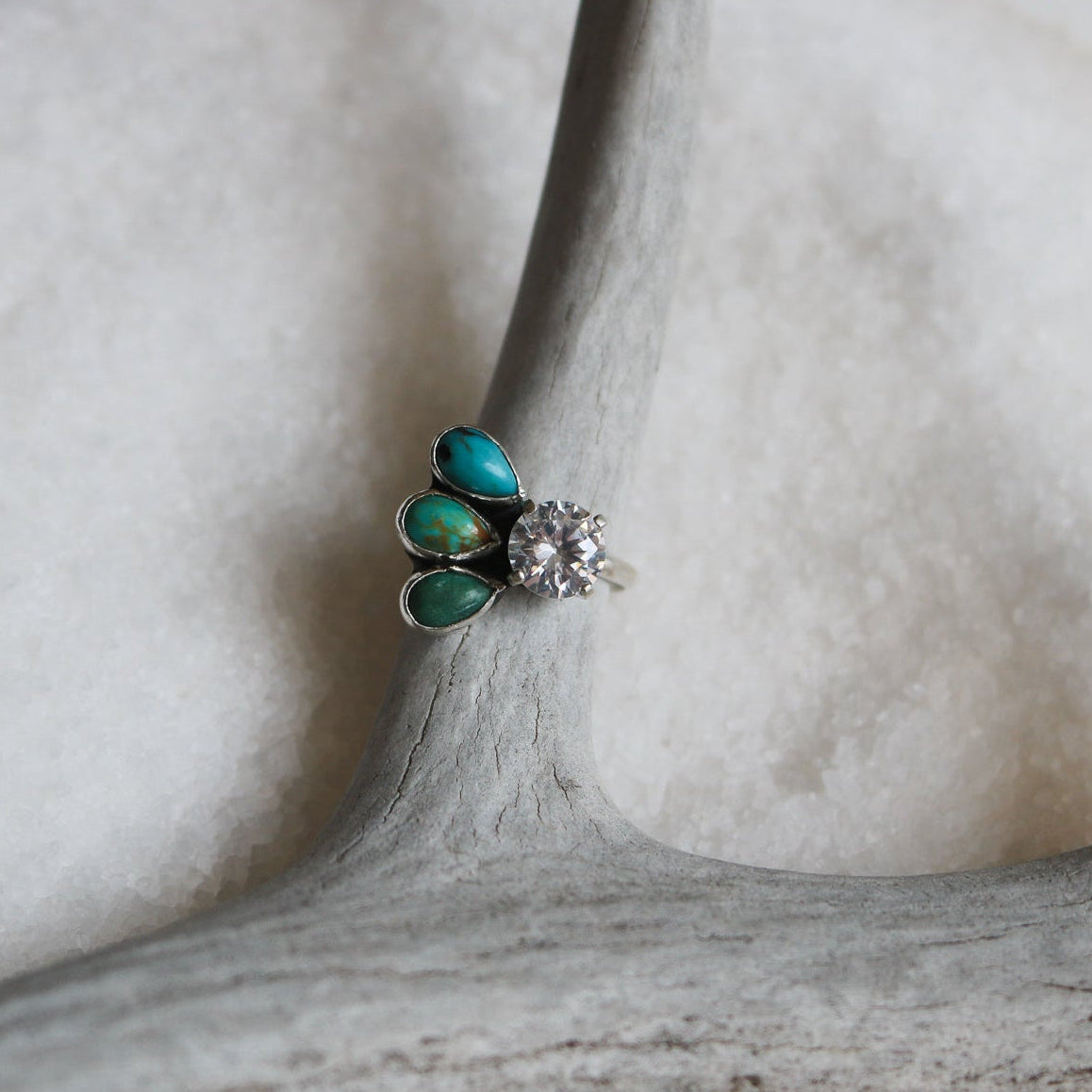
How to Design a Custom Engagement Ring
A custom engagement ring is not just a matter of picking a diamond and deciding what color gold you want.
The best custom designs come together through a series of decisions about the stone, proportions, setting, metal, and details that make the finished ring feel cohesive.
Sometimes a customer comes to us with a very specific vision. They know they want an emerald-cut diamond with tapered baguettes on a substantial yellow gold band.
Other times, they have a folder full of saved photos and no idea what they actually want when all of those elements are put together.
Both are completely normal places to start.
The purpose of the custom design process is to take your ideas, narrow down what you are consistently drawn to, and turn them into a ring that can actually be made, worn, and enjoyed for years to come.
What Makes a Ring Custom?
A custom ring is designed around the specific choices you make rather than selected as a finished design from a collection.
That can mean creating an entirely new ring from scratch, modifying an existing design, incorporating a family stone, or combining elements from several different rings into one.
Custom design gives you control over details such as:
-
The center stone
-
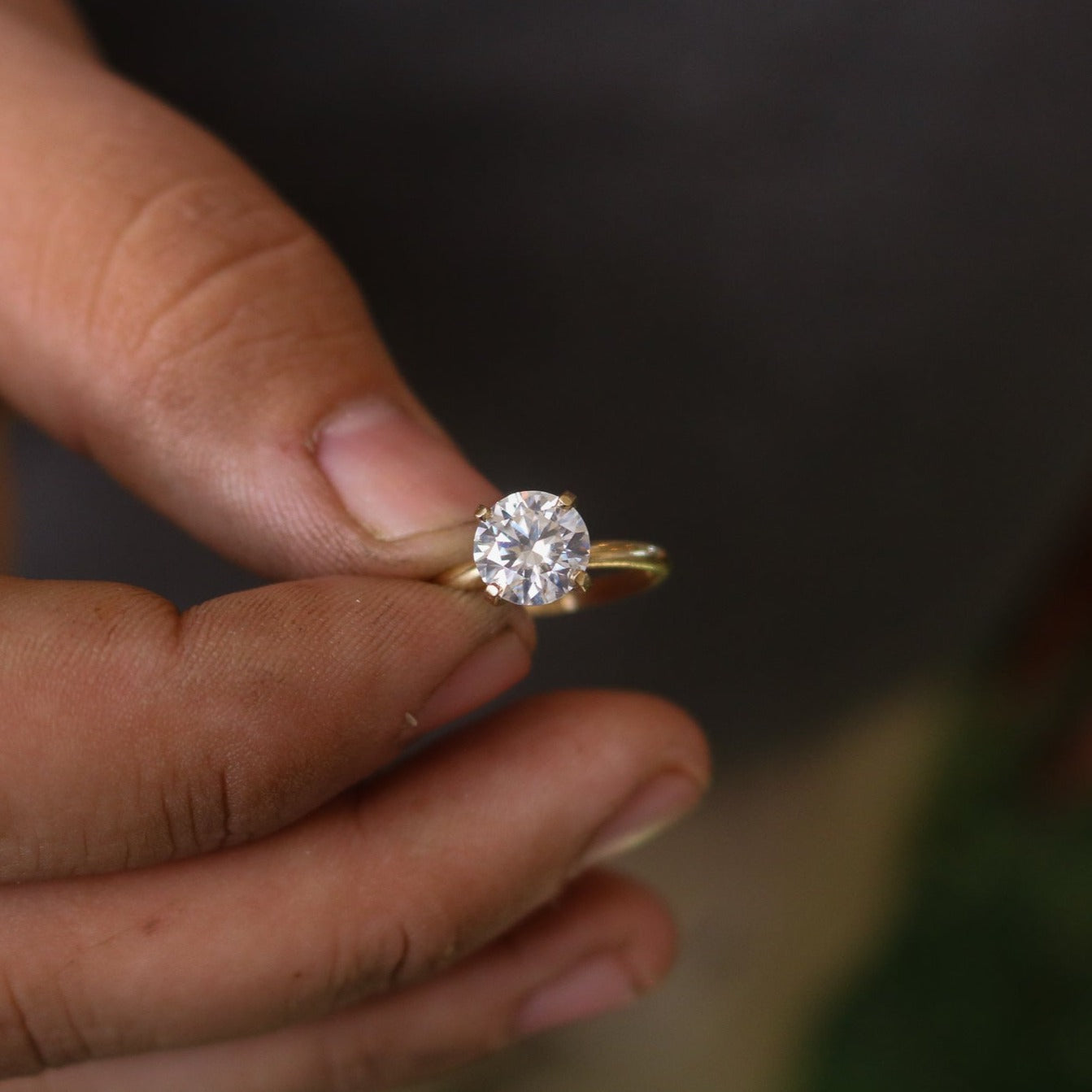
Diamond shape and size
-
Side stones
-
Metal
-
Band width
-
Setting style
-
Profile and height
-
Prong style
-
Engraving or other personal details
-
Overall proportions
The important thing to understand is that custom does not necessarily mean more complicated.
A custom ring can be incredibly simple.
Sometimes the reason to go custom is not to add more detail. It is to get the proportions exactly right.
Start With Inspiration—But Look for Patterns
You do not need to know exactly what you want before starting the process.
In fact, a collection of inspiration photos can be more helpful than one image of a ring you want copied exactly.
Save the rings that consistently catch your attention.
After you have gathered a handful, look for patterns.
You may notice that:
-
Every ring you save has a substantial yellow gold band
-
You are consistently drawn to low-profile settings
-
You prefer elongated stones
-
You like clean, minimal designs with one unexpected detail
-
You keep coming back to three-stone rings
-
You like antique-inspired details but not overly ornate designs
Those patterns are more useful than trying to recreate one ring from a photograph.
A custom ring should be designed as a complete piece, not assembled from unrelated features.
Choose the Center Stone
For most engagement rings, the center stone determines many of the decisions that follow.
Before designing the setting, it helps to narrow down:
-
Stone type
-
Shape
-
Approximate size
-
Budget
-
Whether the stone has already been purchased
You do not always need to choose the exact stone first, but knowing the general direction is important.
An oval diamond and an emerald-cut diamond require different proportions.
A one-carat stone and a four-carat stone will not necessarily work in the same setting without adjustments.
The design should respond to the stone—not force the stone into a predetermined design.
Choose the Stone Type
One of the first decisions is what you want the center stone to be.
At Prairie Sky, that may include:
-
Natural diamond
-
Lab-grown diamond
-
Moissanite
-
High-quality simulated diamond
-
A diamond or gemstone you already own
Each option affects the budget differently.
A natural diamond may take up a larger portion of the overall budget, while lab-grown diamonds, moissanite, and simulated diamonds can leave more room for other elements of the ring.
There is no need to decide that one type of stone is objectively better before you begin.
The right choice depends on what you value.
Think About Size in Millimeters, Not Just Carats
Carat weight is useful, but it does not tell you exactly how large a stone will appear.
Two stones with the same carat weight can have different physical dimensions depending on their shape and proportions.
When designing a custom ring, millimeter measurements are often just as important.
The width of the stone affects:
-
How much space it occupies across the finger
-
The proportions of the side stones
-
The width of the band
-
The overall balance of the ring
A custom design should consider the actual dimensions of the stone rather than relying entirely on a carat number.
Choose the Overall Style of the Ring
Before getting into small details, it helps to establish the general direction.
For example:
Clean and Minimal
A solitaire, bezel, or simple three-stone design with minimal additional detail.
The proportions and materials do most of the work.
Classic
Traditional shapes, balanced proportions, and details that are unlikely to feel tied to one particular trend.
Vintage-Inspired
Milgrain, engraving, intricate settings, old-cut diamonds, or details inspired by antique jewelry.
Modern
Clean lines, interesting proportions, east-west settings, substantial bezels, or unexpected stone combinations.
Organic or Sculptural
Softer lines, hand-finished textures, asymmetry, or a design that feels less rigid and perfectly symmetrical.
These categories are not rules.
A ring can be both classic and modern. Minimal and sculptural. Vintage-inspired without looking like an antique reproduction.
The goal is simply to establish a direction before every possible design detail enters the conversation.
Choose Your Metal
The metal affects far more than color.
It changes the overall character of the ring.
Yellow gold can make a design feel warm and substantial. White gold and platinum create a cooler, more neutral appearance. Rose gold adds softness and warmth.
You will also need to consider the karat of gold or whether platinum is the better fit for your preferences.
The metal should be considered alongside the rest of the design—not added at the very end.
A delicate white gold solitaire and the same ring in substantial yellow gold may feel like two entirely different pieces.
Decide How the Stone Will Be Set
The setting style affects the appearance, profile, security, and wearability of the ring.
Some of the most common choices include:
-
Prongs
-
Bezel
-
Partial bezel
-
Solitaire
-
Three-stone
-
Halo
-
Low-profile settings
-
Cathedral settings
There is no setting that is best for everyone.
A high-set solitaire may be exactly what one person wants and completely impractical for another.
A bezel can offer a lower, more protected profile while changing the way the stone is visually framed.
A three-stone ring can create more width and presence across the finger.
These decisions should be made based on the overall design and how you plan to wear the ring.
Pay Attention to Proportion
This is where custom design becomes particularly valuable.
The individual parts of a ring can all look beautiful on their own and still feel wrong together.
A very thin band may disappear beside a large center stone.
Side stones can overwhelm the center stone if they are too large.
A bezel can feel heavy or delicate depending entirely on its proportions.
Prongs that are too substantial can distract from the stone. Prongs that are too delicate may not be appropriate for the design.
There is no universal measurement that works for every ring.
The proportions should respond to the size and shape of the stone, the width of the band, and the overall look you are trying to achieve.
This is one of the reasons simply copying measurements from another ring rarely produces the best result.
Consider Your Wedding Band Before the Ring Is Finished
You do not need to have your wedding band designed before your engagement ring.
But you should think about how the two will eventually work together.
Some settings allow a straight wedding band to sit flush against the engagement ring.
Others may require a curved or contoured band.
Some people prefer a small intentional gap between the two.
None of these options is wrong, but it is much easier to consider them during the design process than after the engagement ring is complete.
If stacking is important to you, say so early.
Make Decisions About the Details
Once the overall structure of the ring is established, you can start working through the details.
This may include:
-
Band width
-
Band profile
-
Prong style
-
Side stone shape
-
Stone orientation
-
Engraving
-
Milgrain
-
Texture
-
Hidden details
-
Personal or symbolic elements
This is where a custom ring begins to become distinctly yours.
Not every ring needs all of these things.
In fact, adding too many details can make a design feel busy.
Sometimes one carefully chosen element is enough.
A hidden engraving. An unusual side stone. A subtle texture. A band with just enough width to change the entire presence of the ring.
The details should support the design rather than compete with it.
Be Open to Adjustments
An idea may look perfect in a photograph and need to change once it is applied to your particular stone.
This is normal.
A custom ring is not a copy-and-paste process.
The design may need to be adjusted based on:
-
The exact dimensions of the center stone
-
The proportions of the ring
-
Structural requirements
-
Wearability
-
The materials being used
Sometimes the smallest adjustment improves the entire design.
A slightly wider band. Smaller side stones. A lower setting. A different angle. A more substantial bezel.
The goal is not to recreate an inspiration photo exactly.
The goal is to create the best version of the ring you are designing.
Know When to Stop Adding Things
Custom design can make it tempting to include every detail you like.
A little engraving. Some hidden diamonds. Milgrain. Side stones. A halo. A special gallery.
And suddenly, the ring is trying to do six different things at once.
Good design requires editing.
If the center stone is dramatic, the setting may need to be quieter.
If the metalwork is detailed, simple stones may create balance.
If there is one unusual feature, giving it room to stand out is often more effective than surrounding it with additional details.
Custom does not mean adding more.
It means choosing intentionally.
How Long Does a Custom Ring Take?
Custom jewelry requires more time than selecting a finished piece.
The process can include consultation, stone sourcing, design development, revisions, manufacturing, setting, and finishing.
At Prairie Sky, custom orders may take up to 12 weeks, depending on the complexity of the project and materials involved.
If you have a specific proposal date or deadline, begin the process as early as possible.
Custom work is not something we recommend rushing if it can be avoided.
What Should You Bring to a Custom Design Consultation?
You do not need a completed sketch or a detailed technical plan.
It is helpful to bring:
-
Inspiration photos
-
An approximate budget
-
Any preferences about stone type or shape
-
Information about an existing stone you want to use
-
Notes about what you definitely do not like
-
Any timeline or deadline you are working toward
Knowing what you don't want can be just as helpful as knowing what you do.