Understanding the 4 Cs of Diamonds
If you have spent any time shopping for a diamond, you have probably encountered the 4 Cs: cut, color, clarity, and carat weight.
They are the language most commonly used to describe and evaluate diamonds, and understanding them can be incredibly useful when comparing one stone to another. They can also become unnecessarily overwhelming when presented as a race toward the highest possible grade in every category.
That is not how we believe most people should choose a diamond.
The purpose of the 4 Cs is not to tell you which diamond is objectively the best. A flawless, colorless diamond with an exceptional cut and the highest possible carat weight would be extraordinary—but it would also be extraordinarily expensive.
For most people, choosing a diamond is about understanding where quality makes a visible difference, where personal preference comes into play, and where it may be possible to compromise without sacrificing the overall beauty of the stone.
A beautifully chosen diamond is rarely about having the highest number in every category. It is about knowing which qualities matter most to you and how those qualities work together.
The 4 Cs at a Glance
Every diamond is evaluated according to four primary characteristics:
-
Cut: How well the diamond has been proportioned and faceted
-
Color: The amount of color visible within a traditionally white diamond
-
Clarity: The internal and external characteristics present within the stone
-
Carat Weight: How much the diamond weighs
Each affects a diamond's appearance and price, although not always in the same way.
Of the four, some characteristics are immediately visible to the naked eye, while others may be nearly impossible to appreciate without magnification. Understanding that distinction can help you spend your budget where it will have the greatest impact.
Cut: The Quality That Brings a Diamond to Life
Of the 4 Cs, cut is often the most important when it comes to a diamond's overall appearance.
It is also one of the most frequently misunderstood.
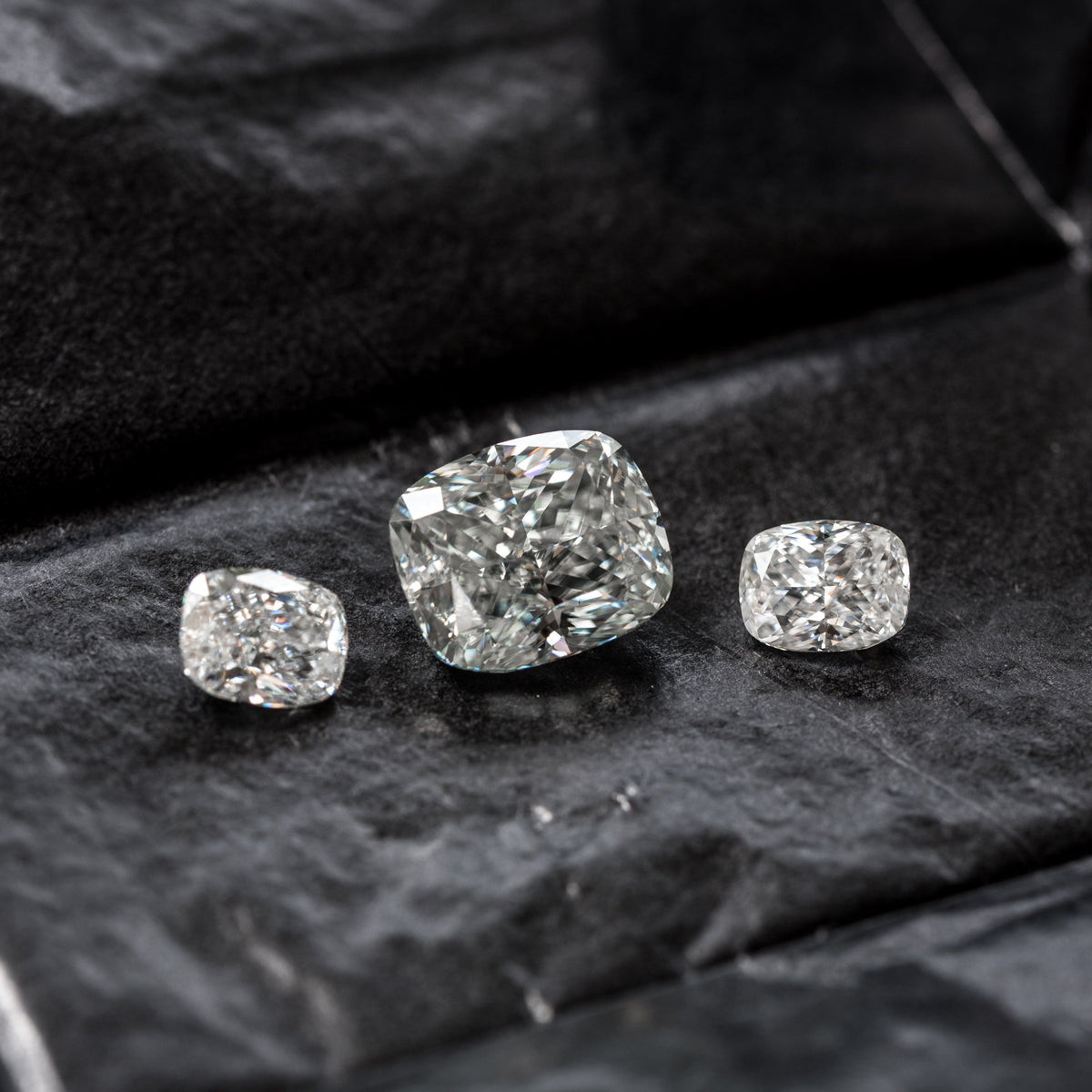
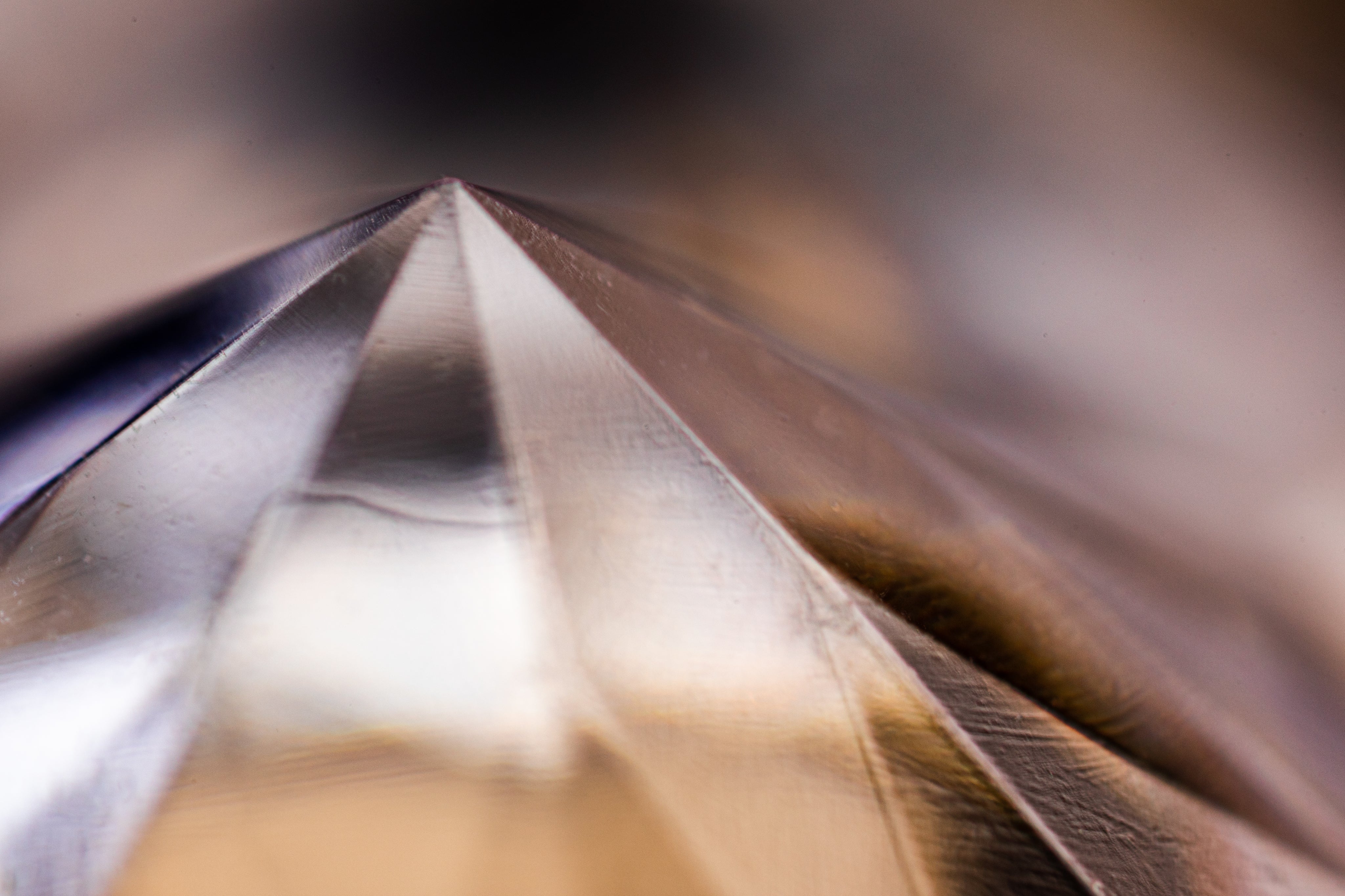
When we talk about a diamond's cut, we are not referring to its shape. An oval, emerald, round, or cushion is a shape. Cut refers to the way the diamond has been proportioned and faceted.
Those proportions determine how light enters the diamond, moves through it, and returns to your eye.
When a diamond is cut well, light is reflected in a way that creates brightness, fire, and scintillation—the flashes and movement that make a diamond appear alive. When proportions are poor, more light may escape through the sides or bottom of the stone, resulting in an appearance that can feel darker, duller, or less lively.
A diamond can have excellent color and clarity and still fail to make much of an impression if it is poorly cut.
What Makes a Diamond Sparkle?
The sparkle we see in a diamond is generally made up of three things:
Brilliance is the white light reflected back to your eye.
Fire refers to the flashes of color that appear when light is dispersed through the diamond.
Scintillation is the pattern of light and dark contrast that creates movement and sparkle as the diamond moves.
A well-cut diamond creates a balance between these qualities, though the exact appearance can vary depending on the shape and faceting style.
A round brilliant, for example, is designed to maximize brilliance and scintillation. An emerald cut has a completely different character, with larger, more dramatic flashes of light created by its step-cut facets.
Neither is inherently better. They are simply beautiful in different ways.
Cut Grades
For round brilliant diamonds, grading reports often use cut grades such as:
-
Excellent
-
Very Good
-
Good
-
Fair
-
Poor
In general, a higher cut grade indicates that the diamond's proportions, symmetry, and polish fall within a range considered more effective at handling light.
Fancy shapes—including ovals, cushions, pears, emerald cuts, and radiants—are more complicated. Their beauty cannot always be summarized by a single cut grade.
An oval may have a beautiful outline but a noticeable bow tie. An emerald cut may have ideal proportions on paper but still appear darker or more windowed in certain areas. A cushion can vary dramatically depending on its faceting pattern.
This is why we recommend looking beyond the grading report whenever possible.
The numbers matter. Your eyes matter too.
Color: How White Do You Actually Want Your Diamond to Look?
Diamond color is generally graded on a scale beginning with D and continuing through Z.
Diamonds at the beginning of the scale appear colorless, while those farther down the scale show increasing amounts of warmth, typically in the form of yellow or brown tones.
The basic ranges are often described as:
D–F: Colorless
Diamonds in this range have very little to no detectable color.
They are often prized for their bright, icy appearance and typically command a premium.
G–J: Near Colorless
These diamonds can still appear beautifully white, particularly once set in jewelry. Depending on the individual stone, shape, and setting, subtle warmth may be visible when compared directly to a higher-color diamond.
For many buyers, this range offers an excellent balance between appearance and value.
K–M: Faint Color
Warmth becomes increasingly noticeable in this range.
That does not automatically make these diamonds undesirable. A warmer diamond can be beautiful, particularly when paired intentionally with yellow or rose gold or when a softer, more antique-inspired appearance is preferred.
N–Z: Noticeable Color
Diamonds in this range display more obvious color. Some buyers intentionally seek these warmer tones, while others prefer a whiter appearance.
The Right Color Depends on the Diamond
A color grade does not exist in isolation.
The shape of a diamond can influence how easily color is visible. Certain shapes tend to reveal more warmth than others because of their facet structure and larger open areas.
The metal surrounding the diamond can also change the way color is perceived. A diamond that looks beautifully white in yellow gold may look noticeably warmer when placed beside a bright white setting.
Personal preference matters as well.
Some people love the crisp, colorless appearance of a D or E diamond. Others prefer a softer warmth and would rather use the difference in price to prioritize size or cut.
There is no reason to pay for a color grade you cannot see—or do not personally care about.
Clarity: What Is Inside the Diamond?
Almost every diamond contains characteristics that developed as it formed.
Internal characteristics are called inclusions, while surface characteristics are referred to as blemishes. These may include tiny crystals, feathers, clouds, growth patterns, or other natural features.
Clarity grades describe the number, size, position, and visibility of these characteristics.
The scale generally includes:
FL and IF: Flawless and Internally Flawless
These diamonds have extremely few or no visible characteristics under 10x magnification.
They are exceptionally rare.
VVS1 and VVS2: Very, Very Slightly Included
Inclusions are present but extremely difficult to locate, even under magnification.
VS1 and VS2: Very Slightly Included
Inclusions are minor and generally difficult to see under 10x magnification.
Many VS diamonds appear completely clean to the naked eye.
SI1 and SI2: Slightly Included
Inclusions are more noticeable under magnification and may sometimes be visible without it.
However, many SI diamonds are still eye-clean, depending on the individual stone and the location and nature of its inclusions.
I1, I2, and I3: Included
Inclusions are generally more obvious and may affect the diamond's transparency, appearance, or durability.
Why “Eye-Clean” Matters More Than Perfection
For most people, an engagement ring is viewed from a normal distance—not through a jeweler's loupe.
This is why the concept of an eye-clean diamond can be more useful than simply choosing the highest clarity grade available.
An eye-clean diamond has inclusions that are not readily visible to the naked eye under normal viewing conditions.
A VS1 diamond and an SI1 diamond may look identical once set in a ring, even though their grading reports are different. If you cannot see the difference, it may not make sense to pay a premium simply for a higher clarity grade.
That said, clarity should never be reduced to a single number alone.
The type and location of an inclusion matter. A small inclusion hidden near the edge of a diamond may have little effect on its appearance, while a more prominent inclusion directly beneath the table could be easier to notice.
Inclusions near delicate points or edges may also deserve closer consideration from a durability standpoint.
The goal is not necessarily to find a flawless diamond. It is to find one whose characteristics do not meaningfully detract from its beauty or longevity.
Carat Weight: More Than a Number
Carat is often the first number people notice when shopping for a diamond.
It is also one of the easiest measurements to misunderstand.
A carat measures weight, not physical size.
Two diamonds can both weigh one carat and appear noticeably different on the hand depending on their shape and proportions. An elongated oval, marquise, or pear may offer more visible surface area than a round diamond of the same weight. Likewise, a diamond that carries more of its weight beneath the surface may face up smaller than another diamond with a broader spread.
For this reason, carat weight should always be considered alongside measurements.
A diamond listed as 2 carats may sound impressive, but its length and width tell you much more about how large it will actually appear once it is set in a ring.
Carat Weight and Price
Diamond prices do not increase at a perfectly even rate as carat weight increases.
Certain “magic sizes,” such as 1 carat, 1.5 carats, 2 carats, and beyond, can command higher prices because of demand and rarity.
Choosing a diamond that falls slightly below one of those thresholds can sometimes offer a similar visual appearance at a more favorable price.
For example, depending on the individual diamonds, a 1.90-carat stone may appear very similar in size to a 2-carat stone while being priced differently.
Again, the individual diamond matters more than the number alone.
How the 4 Cs Work Together
The 4 Cs should not be viewed as four separate competitions.
A diamond with exceptional grades in every category may be extraordinary, but the best diamond for you might involve making thoughtful decisions about where to prioritize.
For example, someone who wants a larger oval diamond might choose:
-
A strong cut and attractive proportions
-
Near-colorless rather than colorless
-
Eye-clean clarity rather than flawless clarity
-
A larger carat weight
Someone else might choose:
-
A smaller diamond
-
Exceptional cut
-
Higher color
-
Higher clarity
-
A classic round shape
Both choices could result in a beautiful ring.
The goal is to understand which characteristics make the greatest difference to you.
Our General Advice
If you are trying to make the most of your budget, we generally recommend beginning with the diamond's overall appearance rather than chasing the highest possible grade on paper.
Prioritize a stone with beautiful proportions and an appealing cut. Choose a color that looks appropriately white—or intentionally warm—to your eye. Look for clarity characteristics that are not distracting in normal viewing conditions. Then consider the carat weight and dimensions that create the visual presence you want.
A diamond certificate is an important tool, but it does not tell the entire story.
Two diamonds with nearly identical specifications can look surprisingly different in person. One may be bright and balanced, while the other appears darker. One may have inclusions that are invisible once set, while another has a characteristic you notice immediately.
The numbers help you narrow the field.
The diamond itself should make the final impression.
Choosing a Diamond With Confidence
The 4 Cs are meant to give you a framework, not make the process more intimidating.
You do not need the highest color, clarity, or carat weight to own a beautiful diamond. You do not need to memorize every grading term before you begin shopping.
Start with the qualities that matter most to you. Look at diamonds side by side when possible. Ask questions about the characteristics that will actually affect appearance and durability.
Most importantly, remember that a diamond is more than its certificate.
Its beauty lies in the way all of those details come together.
A beautifully proportioned stone with a lively cut, an eye-clean appearance, and a color you love may be a far better choice for you than a technically higher-graded diamond that simply doesn't make you feel anything.