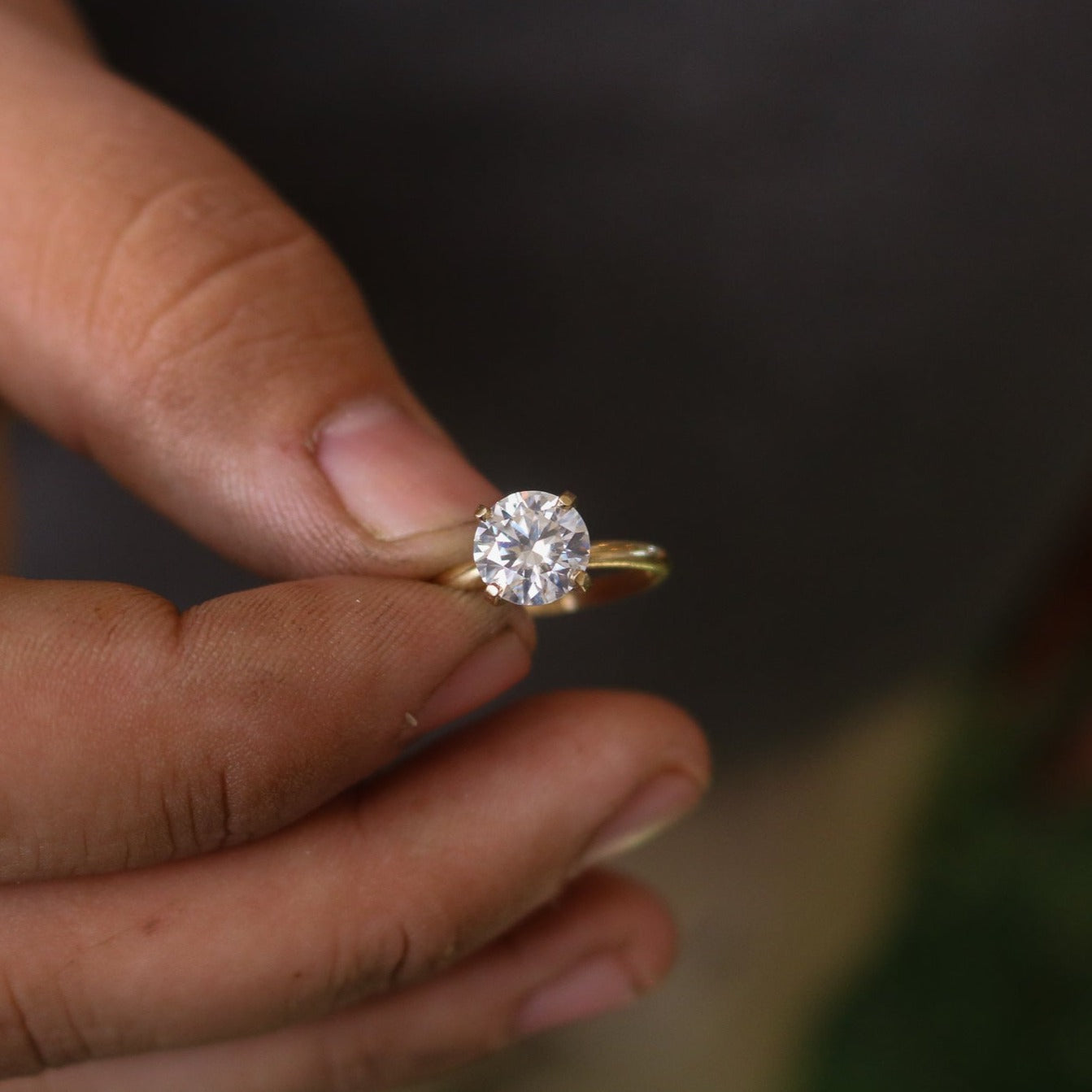
How Much Should You Spend on an Engagement Ring?
There is no shortage of opinions about how much an engagement ring is supposed to cost.
Two months' salary. Three months' salary. Ten percent of something. A number that sounds impressive enough to tell strangers on the internet.
None of that is particularly useful when you're actually trying to buy a ring.
The amount you spend should come down to two things: what you can comfortably afford and what matters most to you in the finished ring.
Because an engagement ring budget is not just about the size of the diamond.
The same $5,000 can buy very different rings depending on the type of center stone, the metal, the setting, the level of craftsmanship, and whether you're choosing a ready-to-wear design or creating something custom.
Understanding those tradeoffs makes it much easier to spend your budget well.
Start With Your Actual Budget
Before you start looking at carat weights, decide how much you are actually comfortable spending.
Not how much someone says you should spend. Not the maximum amount you could finance.
The actual number you are comfortable putting toward the ring.
Once you have that number, you can start making decisions about where the money goes.
For example, with a set budget, you may be able to choose between:
-
A larger center stone and a simple setting
-
A smaller stone with more invested in the design and craftsmanship
-
A natural diamond with a lower carat weight
-
A larger lab-grown diamond
-
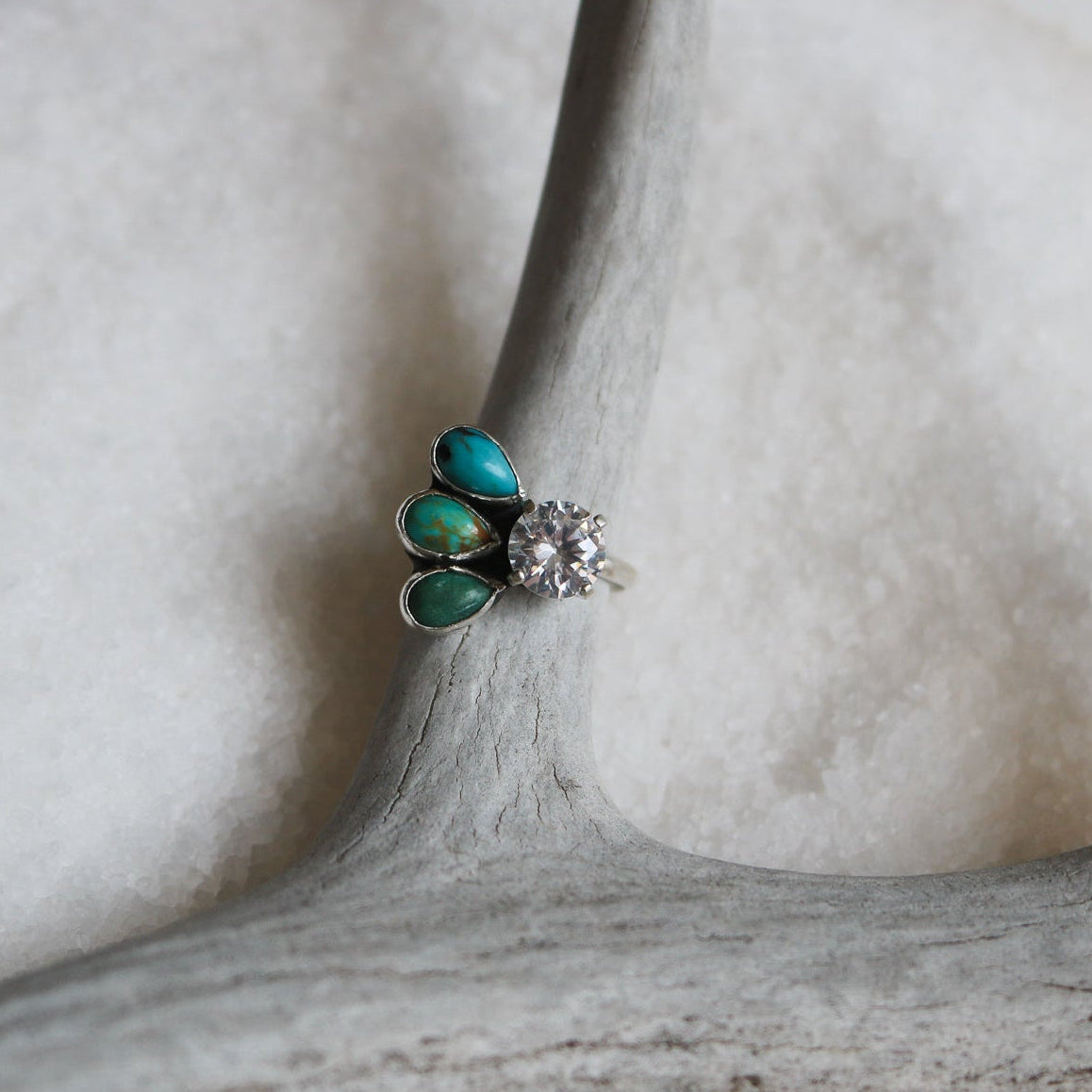
Moissanite or a simulated diamond with more room in the budget for solid gold or additional design details
None of those options is automatically better.
They simply prioritize different things.
Where Does the Money Go?
An engagement ring budget is generally divided between a few major components:
The Center Stone
For most engagement rings, the center stone is the largest single expense.
Its price can vary dramatically depending on:
-
Whether it is natural, lab-grown, moissanite, or simulated
-
Carat weight or physical dimensions
-
Shape
-
Cut quality
-
Color
-
Clarity
The type of stone you choose will often have the biggest impact on what the rest of your budget can accomplish.
The Metal
Gold and platinum add significantly to the cost of a ring.
The price will depend on the type of metal, karat, weight of the finished piece, and the overall design.
A delicate solitaire requires less metal than a substantial, wide band or an intricate custom design.
The Setting
The setting itself can range from relatively simple to highly detailed.
Factors that affect the cost include:
-
The complexity of the design
-
The amount of metal required
-
The number and type of accent stones
-
The setting style
-
The amount of labor involved
A simple solitaire and a custom three-stone ring may use the same center diamond but have very different final prices.
Craftsmanship and Custom Work
If you are creating something custom, part of the budget goes toward the work required to design and build the ring.
That may include design development, stone sourcing, casting, setting, finishing, engraving, or other specialty work.
Custom does not automatically mean expensive—but a more complex design generally requires more time and labor.
The Biggest Budget Decision: Your Center Stone
If you're trying to understand what your budget can realistically buy, the first thing to decide is what type of stone you want.
A natural diamond, lab-grown diamond, moissanite, and simulated diamond can look similar at first glance while existing in very different price ranges.
That means a fixed budget can produce dramatically different results.
Natural Diamonds
Natural diamonds generally require the largest investment when comparing similar sizes and qualities.
If natural origin is important to you, you may decide that a significant portion of the budget should go toward the center stone.
That could mean choosing a smaller carat weight, being more flexible with color or clarity, or selecting a simpler setting.
Lab-Grown Diamonds
Lab-grown diamonds can offer significantly more size within the same budget.
Because they are diamonds, you are still purchasing the durability, appearance, and physical properties of diamond—but without paying the same premium associated with natural rarity.
For someone who wants to prioritize visual size, a lab-grown diamond can dramatically change what is possible within a given budget.
Moissanite
Moissanite offers substantial visual size at a lower price point than diamond.
That can leave more room in the budget for solid gold, a more elaborate setting, or custom details.
Moissanite also has a different appearance from diamond, particularly in the way it reflects light, so it should be chosen because you like moissanite—not simply because it is less expensive.
Simulated Diamonds
Simulated diamonds can offer the most flexibility when budget is a major consideration.
A high-quality simulated stone can create the appearance of a substantial center stone without requiring most of the budget to go toward the stone itself.
At Prairie Sky, we source the highest-quality simulated diamonds available to us and select them for their brilliance, clarity, durability, and overall appearance.
Choosing a simulated diamond does not mean the finished ring has to feel inexpensive.
It simply allows you to allocate your budget differently.
Decide What Matters Most
Every engagement ring involves tradeoffs.
The easiest way to make decisions is to figure out which things you are least willing to compromise on.
If Size Matters Most
You may want to prioritize:
-
Lab-grown diamond
-
Moissanite
-
Simulated diamond
-
Elongated shapes that offer generous finger coverage
You may choose a simpler setting to put more of the budget toward the center stone.
If Natural Origin Matters Most
You may decide to prioritize a natural diamond and make compromises elsewhere.
That could mean:
-
A lower carat weight
-
A simpler setting
-
More flexibility with color or clarity
-
Choosing a shape that offers good visual size for its weight
If Design Matters Most
You may choose a more modest center stone and invest more in:
-
A substantial gold setting
-
Interesting side stones
-
Custom details
-
Hand-finished elements
-
A more complex or unusual design
A ring does not need a massive center stone to have presence.
If You're Working With a Tighter Budget
A high-quality simulated diamond or moissanite can give you significantly more flexibility.
You may be able to choose the solid gold setting you really want, create a more substantial ring, or simply stay within a budget that feels reasonable.
The goal is not to stretch the budget until you hit a certain carat weight.
It is to build the ring you actually want with the money you have available.
Don't Shop by Carat Weight Alone
A specific carat number can be useful as a reference point, but it should not be the only thing guiding your search.
A 2-carat diamond is not a universal size.
Two diamonds with the same carat weight can look noticeably different depending on their shape and proportions.
They can also vary dramatically in price depending on:
-
Natural or lab-grown origin
-
Cut quality
-
Color
-
Clarity
-
Shape
And sometimes, the difference between a 1.8-carat stone and a 2-carat stone is barely noticeable once they are set in a ring.
Millimeter dimensions are often just as important as carat weight.
If your goal is visual size, pay attention to how much physical space the stone occupies—not just the number on the certificate.
Three Ways to Allocate a Ring Budget
There are countless ways to divide a budget, but most ring designs tend to fall somewhere within these three approaches.
Stone-Forward
Most of the budget goes toward the center stone.
The setting is intentionally simple, allowing you to prioritize:
-
A larger diamond
-
Higher color or clarity
-
A natural diamond
-
A specific shape or stone
This works well when the center stone is the main priority.
Design-Forward
More of the budget goes into the setting and overall ring design.
The center stone may be smaller or a more affordable material, allowing room for:
-
Solid gold or platinum
-
Side stones
-
Detailed metalwork
-
A substantial band
-
Custom design work
This approach works well when you care just as much about the ring itself as the center stone.
Balanced
The budget is divided more evenly between the center stone and the setting.
You may choose a stone that gives you the size and appearance you want while still leaving enough room for the metal and design details that matter to you.
For many people, this ends up being the most natural place to start.
A Bigger Budget Doesn't Eliminate Tradeoffs
Even with a larger budget, you will still have decisions to make.
Do you want a larger stone or a rarer one?
Would you rather have a high-quality natural diamond or a larger lab-grown diamond?
Do you want a simple platinum solitaire or a custom gold ring with multiple stones?
There is always another upgrade available.
That is why starting with priorities is more useful than simply looking for the most expensive option you can afford.
A Few Ways to Make Your Budget Go Further
If you have a specific budget but want more flexibility, there are a few things worth considering.
Consider Slightly Below Popular Carat Weights
Diamonds just below major weight thresholds can sometimes offer similar visual size without crossing into the next pricing category.
For example, depending on the stone, a 1.8-carat diamond may look very similar to a 2-carat diamond once set.
Look at Millimeter Dimensions
If your goal is a particular visual size, shop by measurements as well as carat weight.
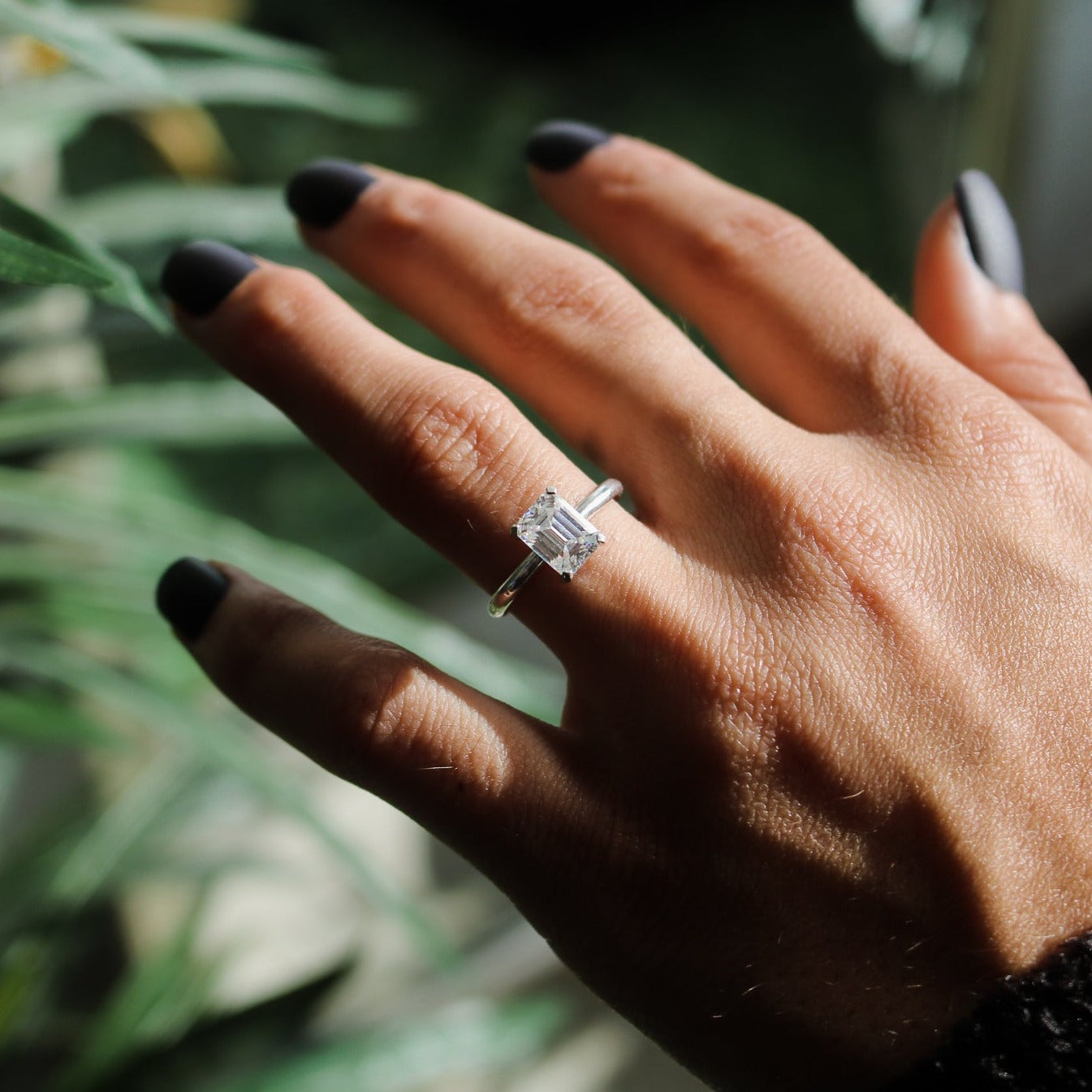
An elongated oval, pear, marquise, radiant, or emerald cut may offer more finger coverage than a more compact shape of the same weight.
Be Strategic About Color and Clarity
You may not need the highest possible grades.
A well-cut diamond with slightly lower color or clarity can still be beautiful, especially when the characteristics are not visible to the naked eye.
Choose the Stone Type Intentionally
This is often the biggest variable.
Changing from natural diamond to lab-grown diamond, moissanite, or simulated diamond can dramatically change the size and quality available within the same budget.
What About Financing?
Financing can be useful if you want to spread the cost of a ring over time.
But it should be treated as a payment method—not as permission to ignore your original budget.
Before financing, make sure you understand the total cost, payment terms, interest, and any promotional conditions.
A monthly payment can make a larger purchase feel smaller than it actually is.
Know the full number before you commit.
Our Advice
Start with a realistic budget.
Then decide what matters most.
Do you care most about natural origin? Size? The overall design? A specific metal? A custom setting?
Once you know that, the decisions become much easier.
You do not need to begin by asking, “How big of a diamond can I get for this amount?”
A better question is:
“What combination of stone, metal, and design gives me the ring I actually want within this budget?”
That is the number worth working toward.